What is ActivityPub? (And Why Does It Matter?)
Whiteout Christmas. Self-hosting fun. Primer on ActivityPub and the Open Web.


🎵 I'm dreaming of a white Christmas 🎵
Maybe a little too white. My whole family was planning to meet at my mom's this holiday, but my brother may be socked in by a storm promising 8 ft. of snow. Last year we were house shopping and stayed in Eureka. The year before, my eldest and I came down with COVID and had to stay behind. What can you do? Hopefully next year will work out better.
I did manage to sneak in a writing sprint last week. 174 words in 12 minutes, not bad considering my creative writings skills are a tad rusty.
"But Ryan," you ask, "your big work project is done. Why aren't you writing?"
They say being an author is 50% writing, 50% marketing and other stuff. In this case, the "50% other stuff" caught up with me. I self-host my author website and newsletter platform.
The upside is I own the data; no single company (Meta, Amazon, Substack, etc.) can arbitrarily decide to close my account and cut me off from my followers. I also have total control over when and if I upgrade to avoid "surprise" breaking changes that make me scramble to get my sites back up and running.
The downside is I also have to do the upgrades. =] I spent a week preparing to upgrade Ghost from v5 to v6, but only an hour upgrading my website from Next.js v15 to v16. My next step will be moving them both to a local server in my house.
Why do such a thing? Partly because of ActivityPub and reclaiming the Open Web, which happens to be this month's feature. Hope you find it insightful!
In this newsletter
- What is ActivityPub? (And Why Does It Matter?)
- Book Sales and Events
- Currently Reading
What is ActivityPub?
And Why Does It Matter?
Cutting straight to the chase, ActivityPub is an open standard for decentralized social networking, and an important step towards reclaiming the Open Web.
A'ight, cool, so what does that mean in English? Let's break it down.
Open Web vs. Walled Garden
To understand "decentralized social networking," it's helpful to know a few terms first: "Open Web" and "Walled Garden."
According to DreamHost:
The Open Web is the part of the internet built on open standards that let you build, move, and integrate without a single vendor’s permission; walled gardens trade that freedom for convenience and control.
Meta's Facebook is a prime example of a walled garden. Meta says what you can post, how often, and what you see by using proprietary algorithms that are constantly changing.
Make no mistake: you aren't Meta's customer. Advertisers are. You're the product they sell to their customers. Everything in between (your posts, videos, engagements, groups, pages, their algorithms) is 100% geared toward that, and that alone. Facebook isn't about showing what's most important to you (family, friends, etc), it's about showing whatever is necessary to keep you on their platform so they can show you more advertisements.
To do that, and to protect their poisonous precious formulas from any sort of competition or criticism, they call all the shots. They dictate the aesthetics, the search algorithms, what's acceptable to post, who can connect, how they connect, and what they can do with your data when they do. And these rules can change on a whim with zero notice or user input. Maintaining this level of control requires you to be on their servers running their software, full stop.
Not exactly a breeding ground for innovation, is it?
Enter the Open Web, a.k.a. how the internet used to be. The Open Web is a collection of independent servers and providers who collaborate via protocols and standards.
An excellent Open Web contrast to Facebook is Mastodon. Where Facebook is one platform controlled solely by one company, Mastodon is open source and decentralized. Instead of a single corporation calling all the shots, Mastodon is a federation of 9,000+ independent servers communicating via a common protocol. Anyone can start a server. Each server can decide which other servers it wants to integrate with. Servers who misbehave (e.g. advertisers, bots) are rejected by the majority of the federation and may as well close shop. Advertisers aren't the customer; you are, which frees the community to focus on features that actually matter to you.
ActivityPub
It's well and dandy that Mastodon servers can talk to other Mastodon servers, but how exactly does that create an Open Web? i.e. how can non-Mastodon networks integrate with Mastodon or others?
As you've probably guessed, the answer is ActivityPub, a prime ingredient in what some call the Social Web. ActivityPub is a simple protocol and open standard for any social network to communicate with any other social network that Mastodon and dozens of other platforms have adopted, including Flipboard, Threads, WordPress, PixelFed, and Ghost.
This means that if I want to subscribe to your WordPress blog from my Mastodon account and see it in my Mastodon client, I can. All I need to know is your ActivityPub address, which looks something like "@user@server.com". For example, users on any platform that integrate with Mastodon can find me by following "@ryansouthwick@wandering.shop". Here's a screenshot of me finding myself from my Ghost instance:
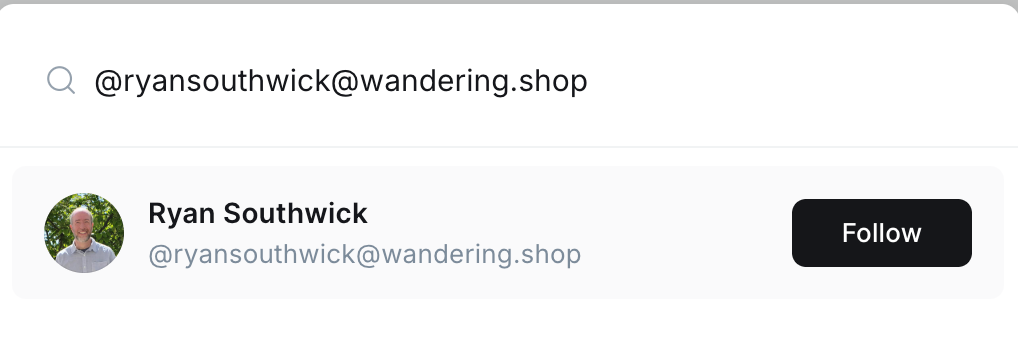
Easy, right?
Ghost
And now, to tie it all together, the latest version of Ghost (my newsletter platform) supports ActivityPub integration, which means you can now follow my newsletter and blog from any social network that supports ActivityPub by searching for "@index@newsletter.ryansouthwickauthor.com".
Here's the reverse of the above: searching for my newsletter from my Mastodon account:
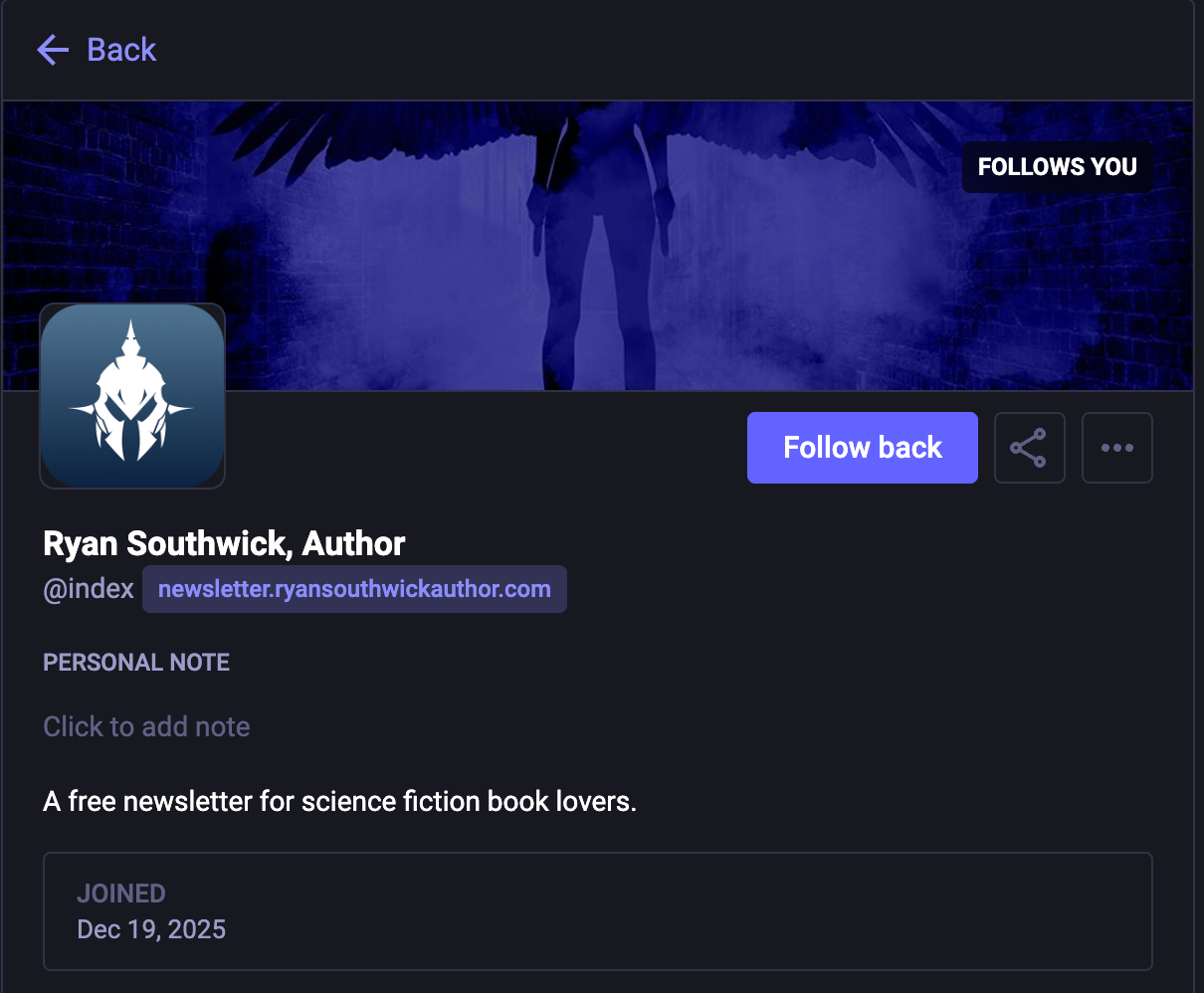
After you've followed me from your social platform of choice (🥹), my newsletter and blog posts will appear directly in your "following" feed. Since I have comments disabled on the site, I'll see your replies in my feed and can interact with them, but the conversation won't appear anywhere on the website. So comment away, I look forward to hearing from you!
From a larger perspective, this means anyone with a Ghost site (hosted by Ghost, or self-hosted like mine) can be found and followed, making discovery, visibility, and engagement that much easier. This takes a modicum of control away from bigger players by taking the game outside their walled gardens and putting it in the hands of independent publishers on whichever platform they prefer.
Note that not all ActivityPub integrations are created equal (looking at you, Bluesky). Searching for my site from Bluesky returns nothing. To get that working, I will need to register an account with an ActivityPub bridge server, which I will do Soon™.
See you on the Open Web!
- Newsletter: @index@newsletter.ryansouthwickauthor.com
- Mastodon: @ryansouthwick@wandering.shop
- Bluesky: @ryansouthwickauthor.com (ActivityPub ID coming soon to a Bridge near you)
Book Sales and Events
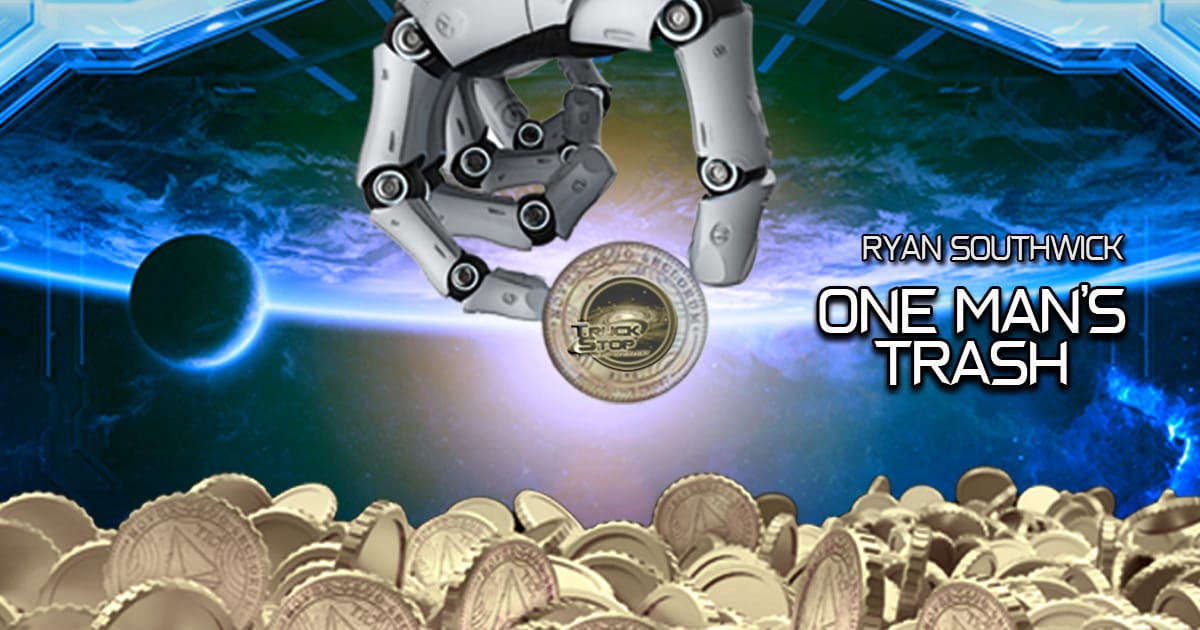
- December — Smashwords end-of-year sale. Big discounts on just about everything in their store through the end of 2025, including my entire Water Dragon Publishing backlog (The Z-Tech Chronicles, One Man's Trash).
Currently Reading
The only things I've been reading lately are JavaScript code and compliance documentation, neither of which you probably want to hear about. I hope to have something more interesting to report next month.
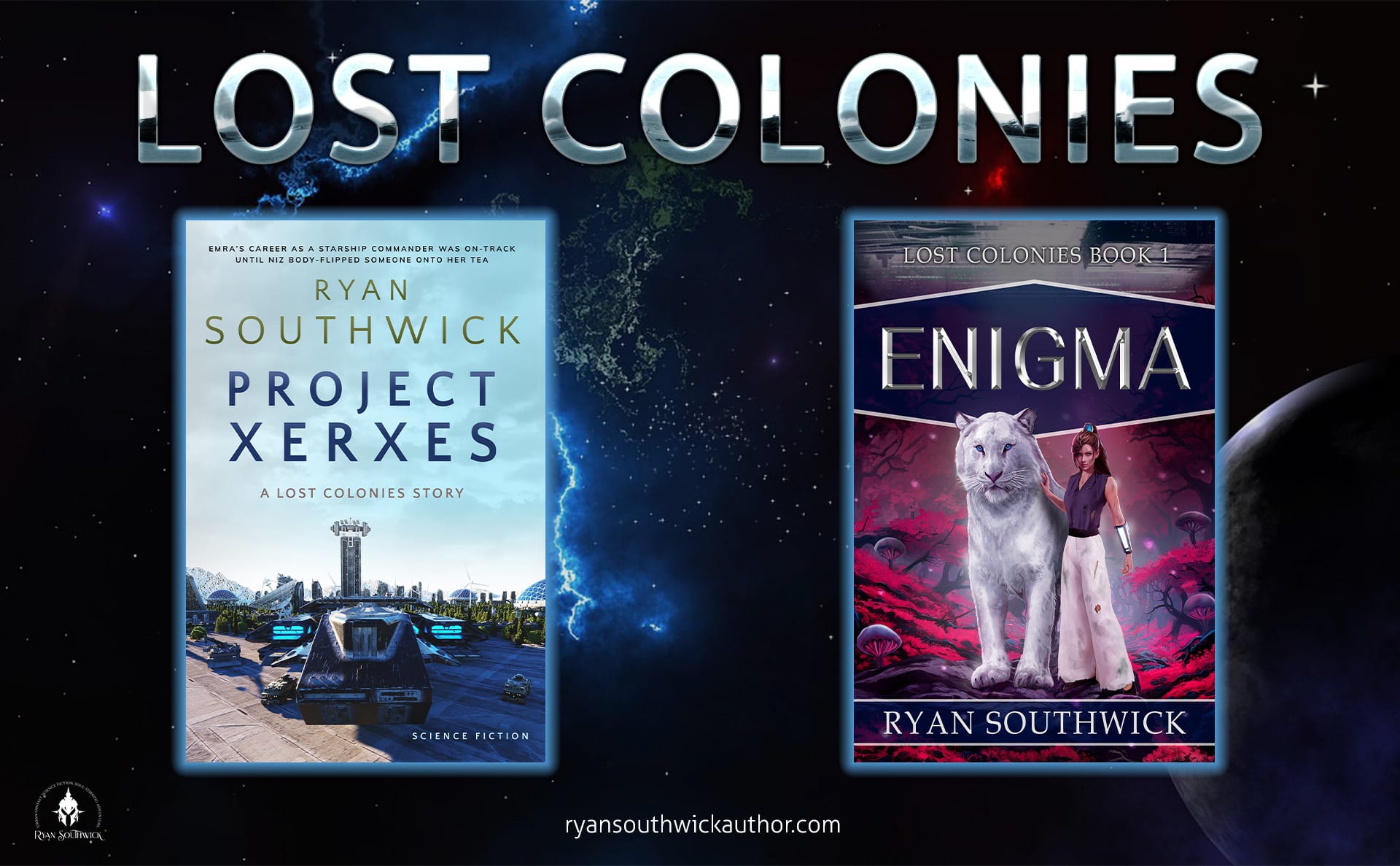
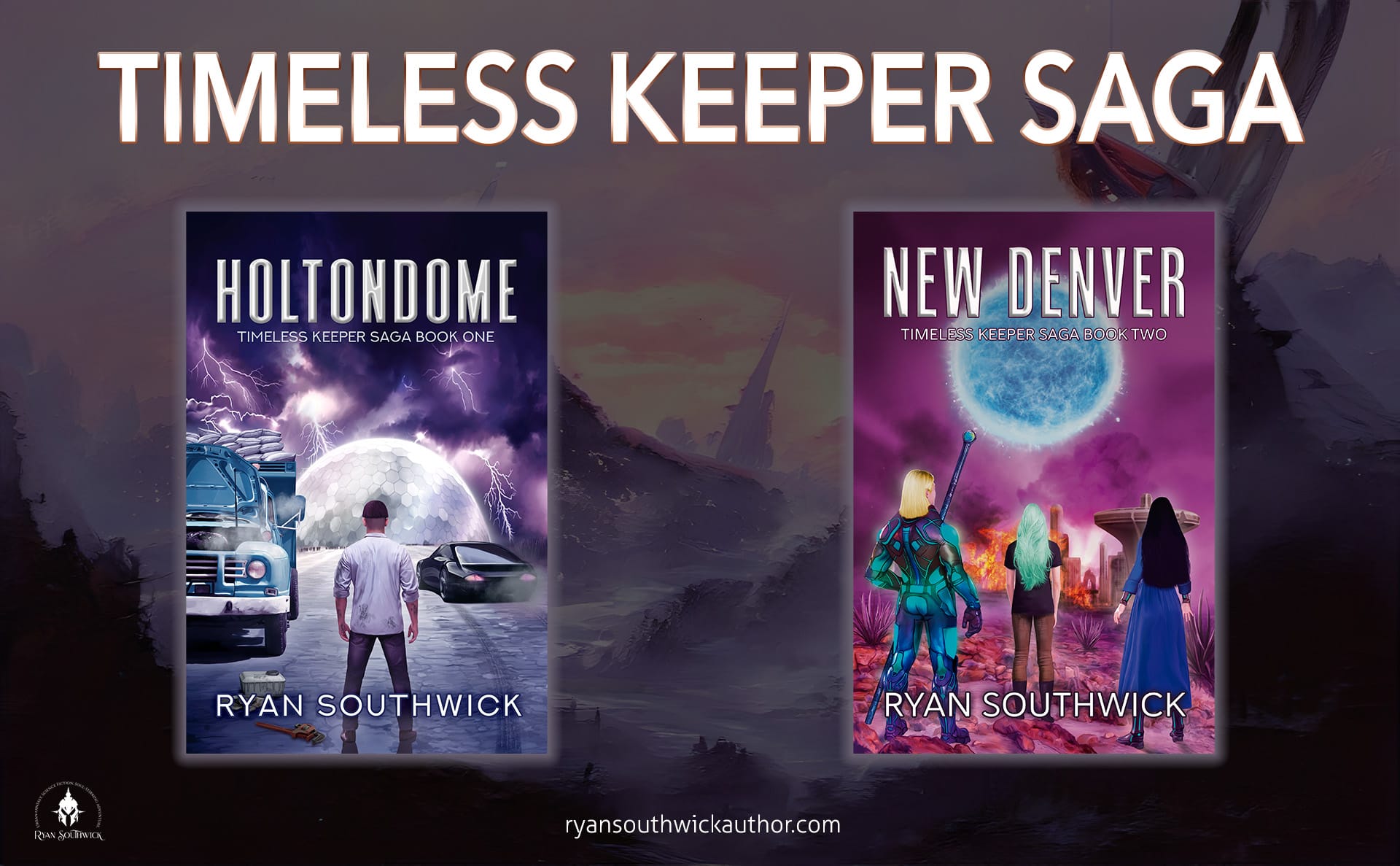
My Books

Follow me on: